













Sourcing Mechanical Parts from Vietnam: From RFQ to Delivery
Sourcing mechanical parts from Vietnam can work well when the buyer and supplier establish clear requirements before production begins. A custom part order may involve drawing review, material selection, machining, inspection, finishing, packaging, and delivery. These steps should be discussed as one project, even when different operations are handled by different providers.
The following workflow can help international buyers organize an RFQ and work effectively with a Vietnam-based machining workshop.
Step 1: Prepare a Clear RFQ
Start by collecting the information a supplier needs to understand the parts:
- 3D CAD model and dimensioned drawing
- Part number and drawing revision
- Material grade or required material properties
- Quantity for each part
- Tolerances and critical dimensions
- Surface finish or treatment
- Inspection and documentation requirements
- Target delivery date and destination
If a material or finish has not been selected, explain the application and operating conditions. The supplier may be able to discuss options, but the final requirement should be confirmed before production.
Step 2: Review Technical Questions
After receiving the RFQ, the supplier should review the geometry and specifications before confirming the quotation. Questions may relate to missing dimensions, unclear tolerances, thread details, inspection points, or a conflict between the CAD model and drawing.
Responding to these questions early can reduce uncertainty. If the drawing changes, provide a clearly identified revision and state which version should be used.
Step 3: Confirm the Quotation Scope
A quotation should identify what is included in the proposed work. Review the part quantity, material, machining process, finishing, inspection, documentation, packaging, and shipping terms.
If some operations are coordinated with external suppliers, ask how they fit into the schedule and who is responsible for confirming the requirements. A clear scope makes it easier to compare quotations and avoid misunderstandings after order confirmation.
Step 4: Approve the Production Requirements
Before production begins, confirm the approved drawing revision, material, quantity, finish, critical dimensions, and delivery requirements. If the order includes multiple part numbers, make sure the quotation and order information clearly identify each item.
For confidential designs, discuss an NDA before sending files if one is required by your company.
Step 5: Manufacture and Inspect the Parts
The workshop plans the machining and inspection according to the part design and order requirements. CNC milling and CNC turning may be used for different types of geometry. The inspection plan should focus on the dimensions and features agreed with the customer.
If an inspection report or other quality record is required, confirm its format and scope in advance. The exact documents available should be agreed for the project rather than assumed.
Step 6: Coordinate Finishing, Packaging, and Delivery
Some parts need secondary finishing or additional handling after machining. Confirm who coordinates these steps, how the finished parts will be protected, and what shipping information is needed.
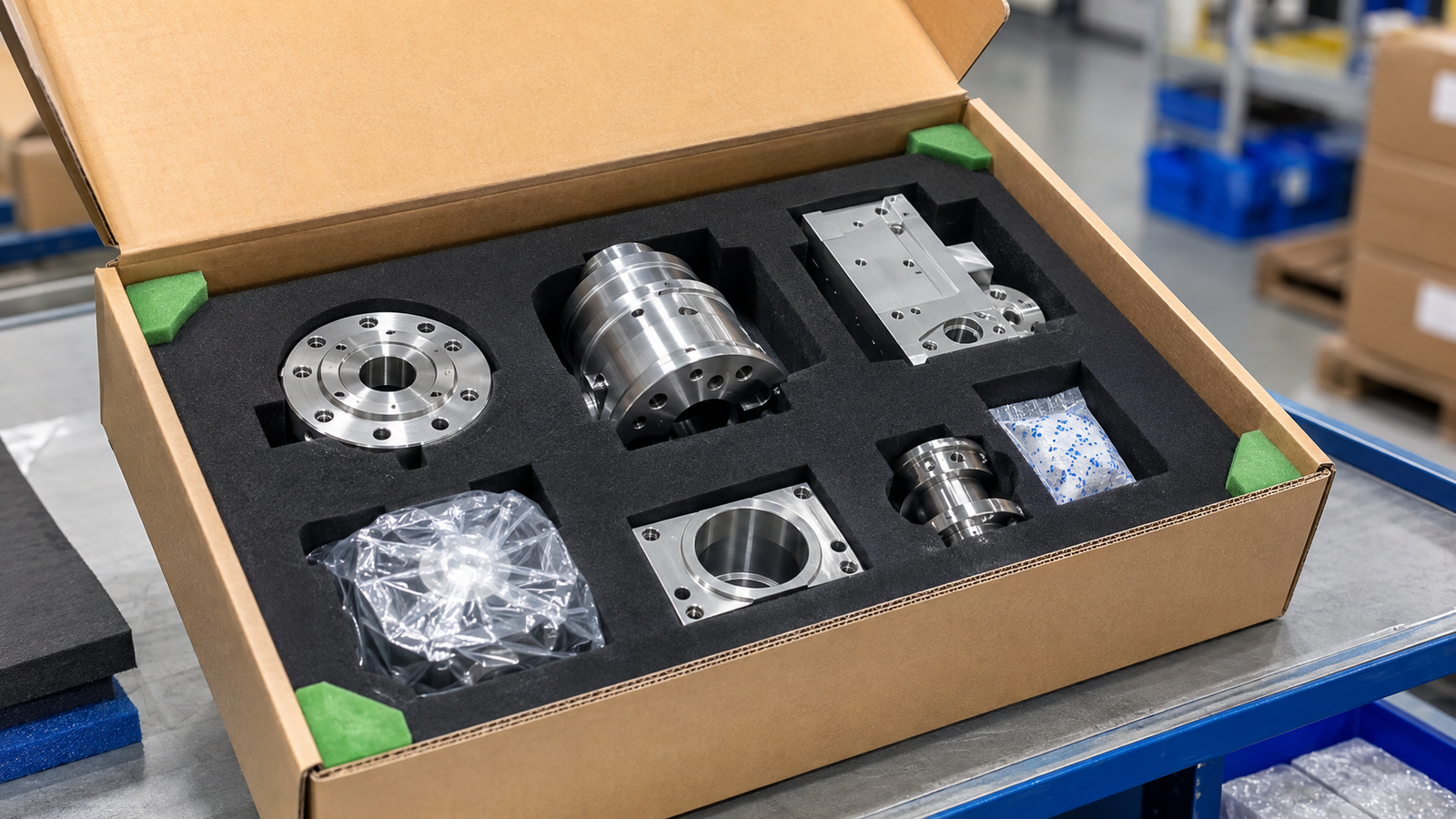
Packaging should suit the part’s size, surface condition, and transportation route. Share any labeling, packing, or export-document requirements before the order is ready to ship.
Communication During the Project
International sourcing requires clear communication when requirements change. Tell the supplier promptly about drawing revisions, quantity changes, delivery updates, or inspection changes. Ask for confirmation that the change has been understood and reviewed for its effect on cost or schedule.
A practical sourcing process is built around one approved set of requirements, clear responsibilities, and written confirmation at key stages.
Frequently Asked Questions
Can I request a quotation before the design is final?
Yes. State that the design is preliminary and identify what remains undecided. The supplier can explain which details are needed for a firm quotation.
Should I send both a CAD model and a drawing?
When available, send both. The model communicates geometry, while the drawing can define tolerances, threads, and other requirements.
Can a workshop coordinate additional operations?
This depends on the project and supplier. Confirm which operations are performed directly and which are coordinated with other providers.
Planning to source mechanical parts from Vietnam?
Send OSM your drawings, quantities, and requirements for review.