







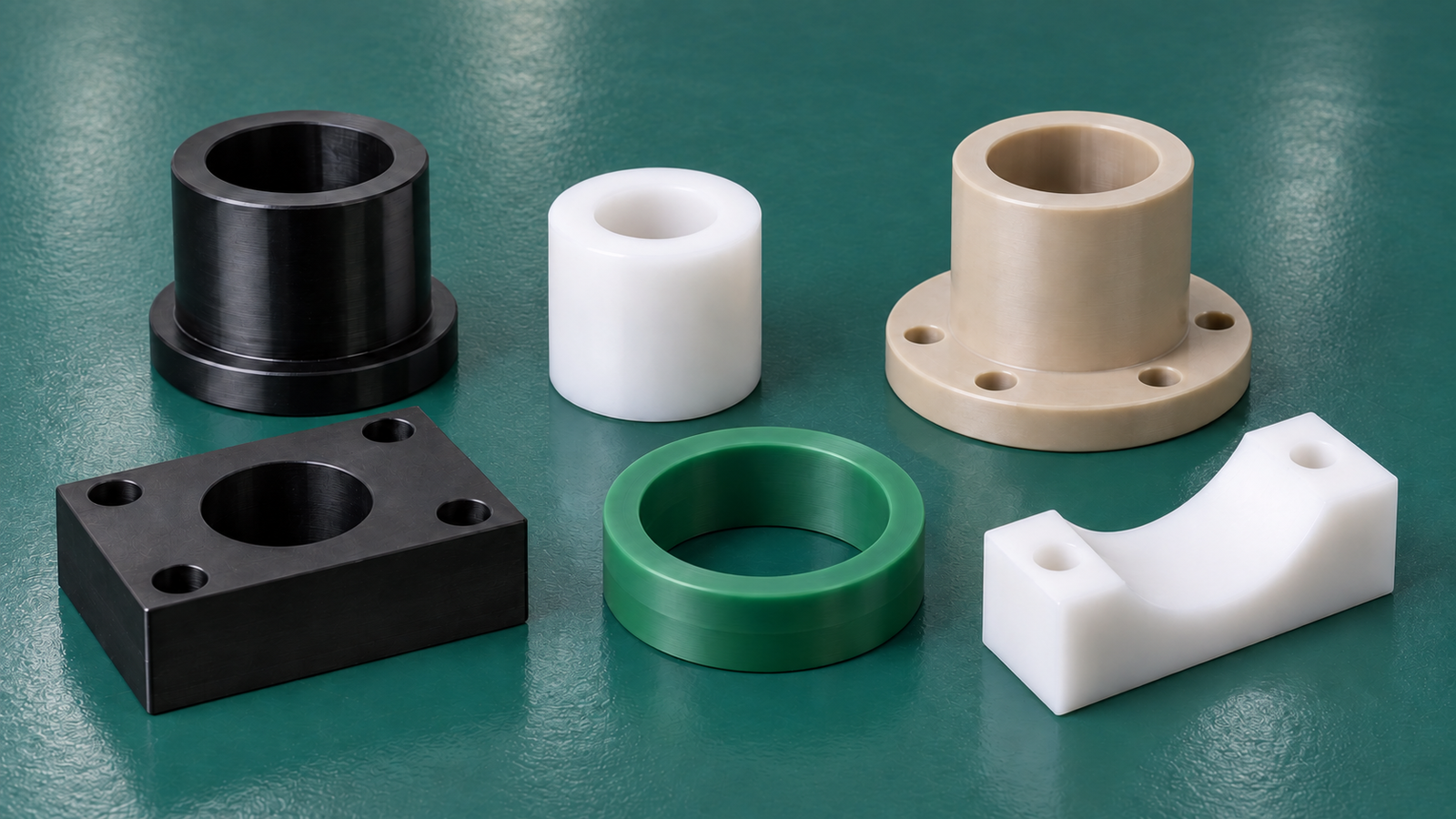
CNC Machining Drawings: How to Prepare an Accurate RFQ
Preparing complete CNC machining drawings is one of the most effective ways to obtain an accurate quotation for custom mechanical parts.
When sourcing CNC machining services in Vietnam, buyers often focus on unit price and delivery time. However, the quality of the information provided during the Request for Quotation (RFQ) stage can significantly affect both.
Incomplete drawings, missing material grades, unclear tolerances, or unspecified finishing requirements may result in additional technical questions, revised quotations, and production delays.
For companies purchasing custom components, prototypes, or multiple part numbers, a well-organized RFQ package helps the machining workshop understand the project and provide a more reliable estimate.
At OSM Vietnam, we focus on custom CNC machining and practical engineering support for customers who value clear communication and coordinated manufacturing.
This guide explains how to prepare CNC machining drawings, CAD files, technical specifications, and RFQ information before contacting a machining supplier.
1. Why CNC Machining Drawings Matter
CNC machining drawings define the requirements that a finished component must meet.
A 3D model may show the part’s shape, but it does not necessarily communicate every manufacturing requirement.
For example, two components with identical geometry may have different costs because of their material grades, tolerances, surface roughness, inspection requirements, or finishing processes.
Clear technical documentation helps the supplier:
- Understand the part geometry and function.
- Identify suitable machining operations.
- Estimate programming and setup time.
- Select raw materials and cutting tools.
- Evaluate critical tolerances.
- Plan dimensional inspection.
- Identify additional manufacturing processes.
- Estimate production lead time.
The goal is not simply to provide more information. It is to provide the information that affects manufacturing decisions.
2. Send Both 2D Technical Drawings and 3D CAD Models
For most custom CNC machining projects, providing both a 2D drawing and a 3D CAD model is recommended.
These documents serve different purposes.
2D Technical Drawings
A 2D technical drawing should communicate the manufacturing and inspection requirements.
Important information may include:
- Part number and drawing revision.
- Material specification.
- Dimensions and tolerances.
- Thread and hole details.
- Surface roughness requirements.
- Geometric tolerances and datum references.
- Heat treatment or surface coating.
- General manufacturing notes.
PDF is a practical format for sharing technical drawings.
3D CAD Models
A 3D model communicates the complete geometry of the part and helps the supplier evaluate manufacturing feasibility.
STEP is a widely used neutral format for exchanging 3D geometry between different CAD systems.
Native CAD files may also be useful when compatible software is available.
Why Both Files Are Important
The 3D model helps the supplier understand the shape and prepare machining operations.
The 2D drawing identifies the dimensions and technical requirements that must be achieved.
For example, a STEP model may show a bearing hole, but the drawing is needed to define its fit tolerance and any relevant geometric requirements.
If your project is still at the design stage, OSM also offers custom mechanical design services in Vietnam to support CAD development and manufacturing documentation.
3. Specify the Exact Material Grade
Material selection influences machining cost, tool selection, part performance, and procurement lead time.
A description such as “aluminum” or “stainless steel” may not be sufficient.
Whenever possible, specify the exact grade.
Common examples include:
- Aluminum 6061 and 7075.
- Stainless steel 304 and 316.
- Carbon and alloy steels.
- Brass.
- Copper.
- Engineering plastics such as POM and PA.
Different material grades have different mechanical properties and machining characteristics.
If an equivalent material is acceptable, include the conditions for substitution.
If material certificates or traceability records are required, state this in the RFQ.
For projects containing many components, a material specification for each part number helps avoid confusion.
4. Define Tolerances Based on Functional Requirements
Dimensional tolerances define the acceptable variation from nominal dimensions.
They are essential for ensuring correct fit and function.
However, unnecessarily tight tolerances may increase manufacturing and inspection costs.
General Tolerances
Use an appropriate general tolerance specification for dimensions that do not require individual tolerances.
Clearly identify the applicable standard or tolerance values.
Critical Dimensions
Features that directly affect assembly or performance may require tighter control.
Examples include:
- Bearing seats.
- Shaft fits.
- Locating holes.
- Sealing surfaces.
- Precision alignment features.
- Critical mounting interfaces.
Geometric Tolerances
Some components require control of flatness, perpendicularity, position, runout, or other geometric relationships.
Where geometric tolerances are used, include appropriate datum references and unambiguous drawing requirements.
Avoid Over-Specification
Applying tight tolerances to every feature can increase manufacturing effort without improving performance.
A practical drawing distinguishes critical features from noncritical geometry.
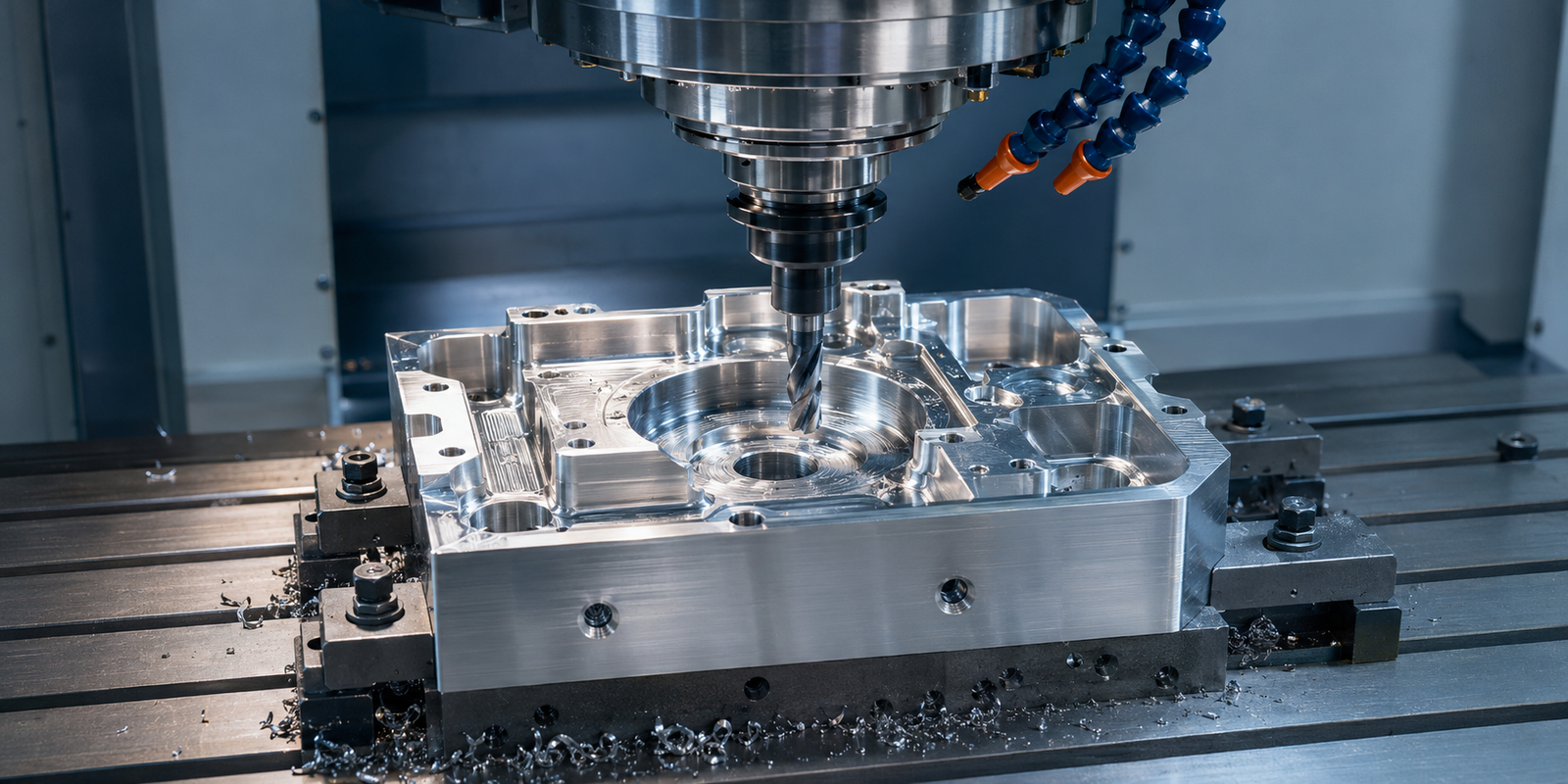
For prismatic parts with pockets, slots, and mounting surfaces, see OSM’s CNC milling services in Vietnam.
5. Provide Complete Hole and Thread Information
Holes and threads are common features in CNC machined components.
Incomplete specifications may lead to incorrect assumptions during quotation or production.
Include the following where applicable:
- Hole diameter.
- Thread designation.
- Thread pitch or series.
- Thread depth.
- Hole depth.
- Through-hole or blind-hole requirement.
- Counterbore or countersink dimensions.
- Positional tolerance.
For example, specifying an M10 thread without identifying a nonstandard pitch can lead to confusion.
Blind tapped holes also require consideration of usable thread depth and tool clearance.
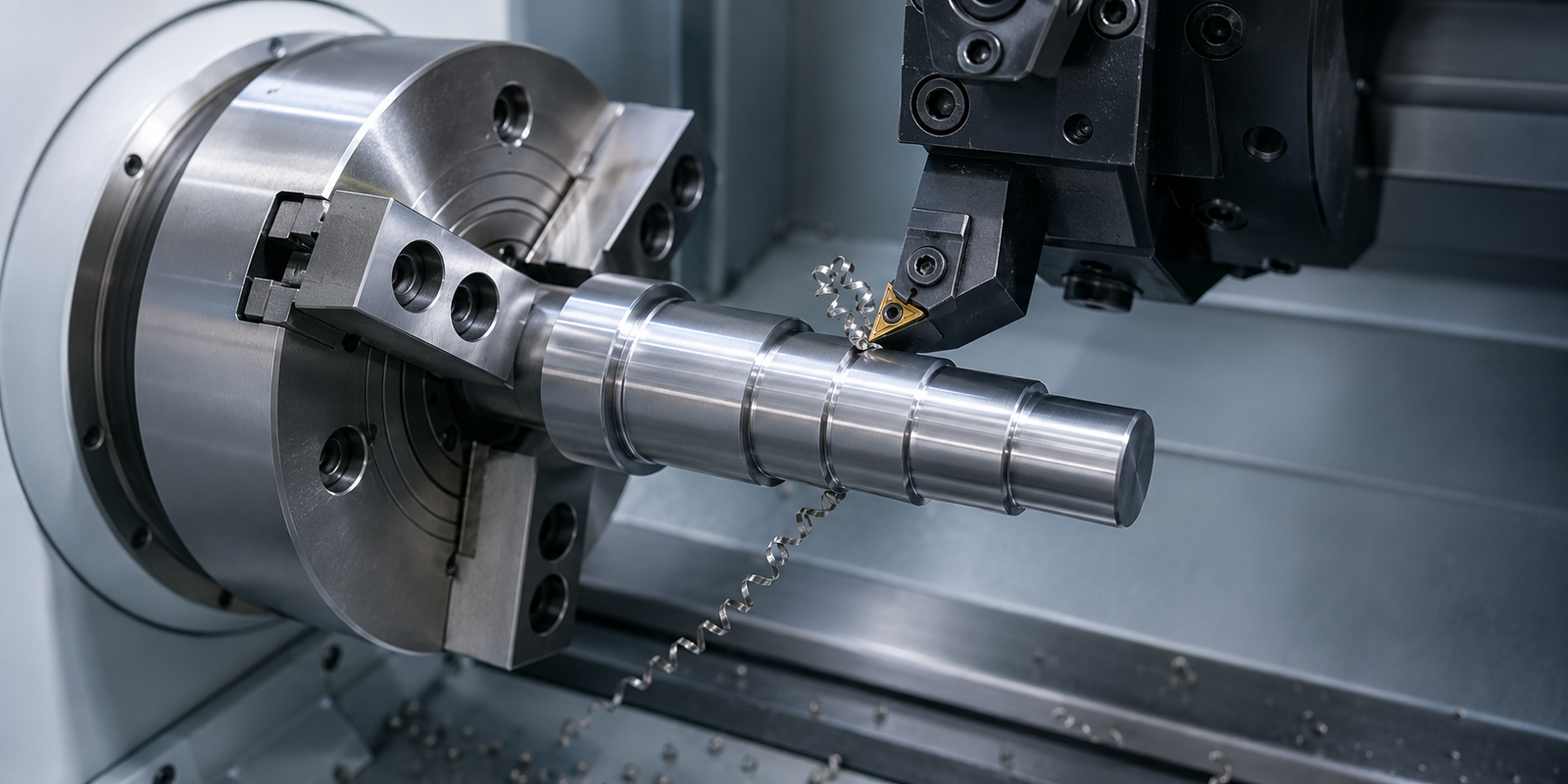
For shafts, bushings, sleeves, and threaded cylindrical parts, learn more about custom CNC turning services at OSM.
6. Specify Surface Roughness and Finishing
Surface requirements can influence the machining process and final cost.
Not every surface requires the same finish.
A bearing seat, sealing face, and cosmetic exterior surface may have different functional requirements.
Surface Roughness
Where required, specify surface roughness using an appropriate parameter such as Ra.
Avoid assigning demanding roughness requirements to every surface unless necessary.
Surface Treatment
Common treatments include:
- Aluminum anodizing.
- Zinc plating.
- Nickel plating.
- Heat treatment.
- Passivation where appropriate.
- Other customer-specified finishes.
State the required treatment, appearance, color, coating thickness, or applicable specification.
Coatings and heat treatment may affect finished dimensions, so critical fits should be considered during process planning.
7. Include Quantity for Every Part Number
Quantity is essential for preparing a meaningful CNC machining quotation.
Programming, fixture preparation, and machine setup may be required even when manufacturing only one component.
Therefore, the unit price for a prototype can differ significantly from the price for a production batch.
A useful RFQ should identify:
- Part number.
- Drawing revision.
- Required quantity.
- Prototype quantity, if applicable.
- Expected repeat-order quantity.
- Requested delivery date.
For example, a machine-building project may contain 20 different components, each with its own quantity.
A clear part list helps the workshop estimate the total scope more accurately.
If repeat orders are expected, requesting prices at different quantities may support purchasing decisions.
8. Provide Assembly Drawings and a Bill of Materials
Some projects require complete assemblies rather than individual machined parts.
An assembly may include shafts, bearings, bushings, springs, fasteners, and purchased components.
If assembly is required, provide:
- Assembly drawings.
- A Bill of Materials (BOM).
- Part numbers and quantities.
- Specifications for purchased components.
- Assembly instructions where necessary.
- Functional testing requirements.
- Acceptance criteria.
For example, a mechanical clamping mechanism may require machining, purchased springs and pins, assembly, and movement testing.
These requirements should be clearly included in the quotation request.
OSM offers custom assembly services in Vietnam for projects requiring coordinated component assembly and agreed functional checks.
9. Identify Inspection and Quality Documentation Requirements
Inspection requirements may affect both quotation cost and production planning.
Depending on the project, customers may request:
- Dimensional inspection reports.
- First Article Inspection (FAI).
- Material certificates.
- Surface treatment records.
- Surface roughness measurements.
- Functional testing.
- Customer-specific quality documentation.
Not every project requires the same level of documentation.
First Article Inspection
FAI can be useful for new designs, first production orders, or changes in manufacturing arrangements.
It provides documented inspection of the first manufactured component against agreed requirements.
Critical Feature Inspection
Identify the dimensions and characteristics that directly affect function or assembly.
This helps the workshop select appropriate measuring methods and plan inspection efficiently.
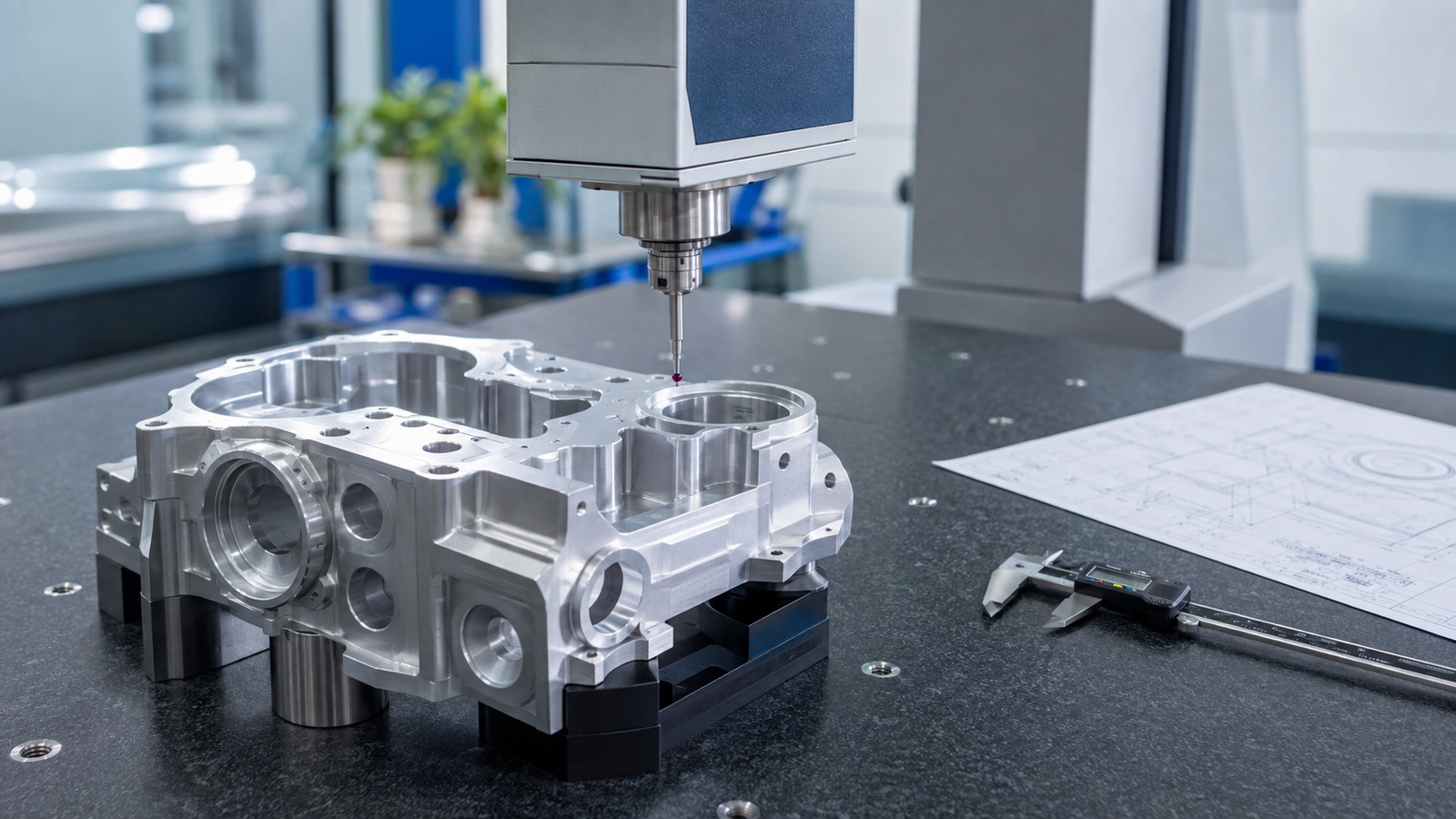
Learn more about OSM’s CNC machining quality control and inspection.
Documentation availability and scope should be confirmed during quotation.
10. Review Design for Manufacturability Before Production
Design for Manufacturability (DFM) is the process of evaluating a design to improve its manufacturing efficiency while maintaining the required function.
Common machining challenges include:
- Deep and narrow pockets.
- Very small internal corner radii.
- Thin walls.
- Difficult-to-access holes.
- Excessive material removal.
- Unusual thread specifications.
- Tight tolerances on noncritical features.
Example: Internal Corner Radius
A small internal radius may require a small cutting tool.
If the pocket is deep, the tool may have limited rigidity, affecting machining efficiency.
Increasing the radius, where functionally acceptable, may allow a more practical machining approach.
Example: Tolerance Optimization
A mounting plate may require precision at locating holes while allowing general tolerances on external edges.
Identifying the critical features can reduce unnecessary machining and inspection effort.
Any design change must be approved by the customer before manufacturing.
For additional engineering support, visit OSM’s custom mechanical design services.
11. Organize an RFQ Package for Multiple CNC Parts
For projects containing many drawing numbers, clear document organization is particularly important.
A recommended RFQ package includes:
- Project overview.
- Part list or BOM.
- PDF drawings.
- STEP files.
- Material specifications.
- Quantity per part number.
- Finishing requirements.
- Inspection and documentation requirements.
- Delivery information.
File Naming Example
Use consistent file names that include the part number and revision.
Examples:
PART-001_REV-A.pdfPART-001_REV-A.stepPART-002_REV-B.pdfPART-002_REV-B.step
This reduces the risk of mixing drawings from different revisions.
Revision Control
Always identify the revision approved for quotation.
If a drawing changes after a quote is issued, request confirmation of any effect on price and lead time.
12. Define Delivery and Packaging Requirements
A complete RFQ should include logistics information.
Buyers should specify:
- Shipping destination.
- Requested delivery date.
- Packaging requirements.
- Whether partial shipments are acceptable.
- Preferred delivery terms.
- Part identification and labeling requirements.
For international orders, the agreed Incoterms rule should be clearly stated where applicable.
Manufacturing completion and transportation time should be considered separately.
Parts with precision surfaces or protective coatings may require specialized packaging.
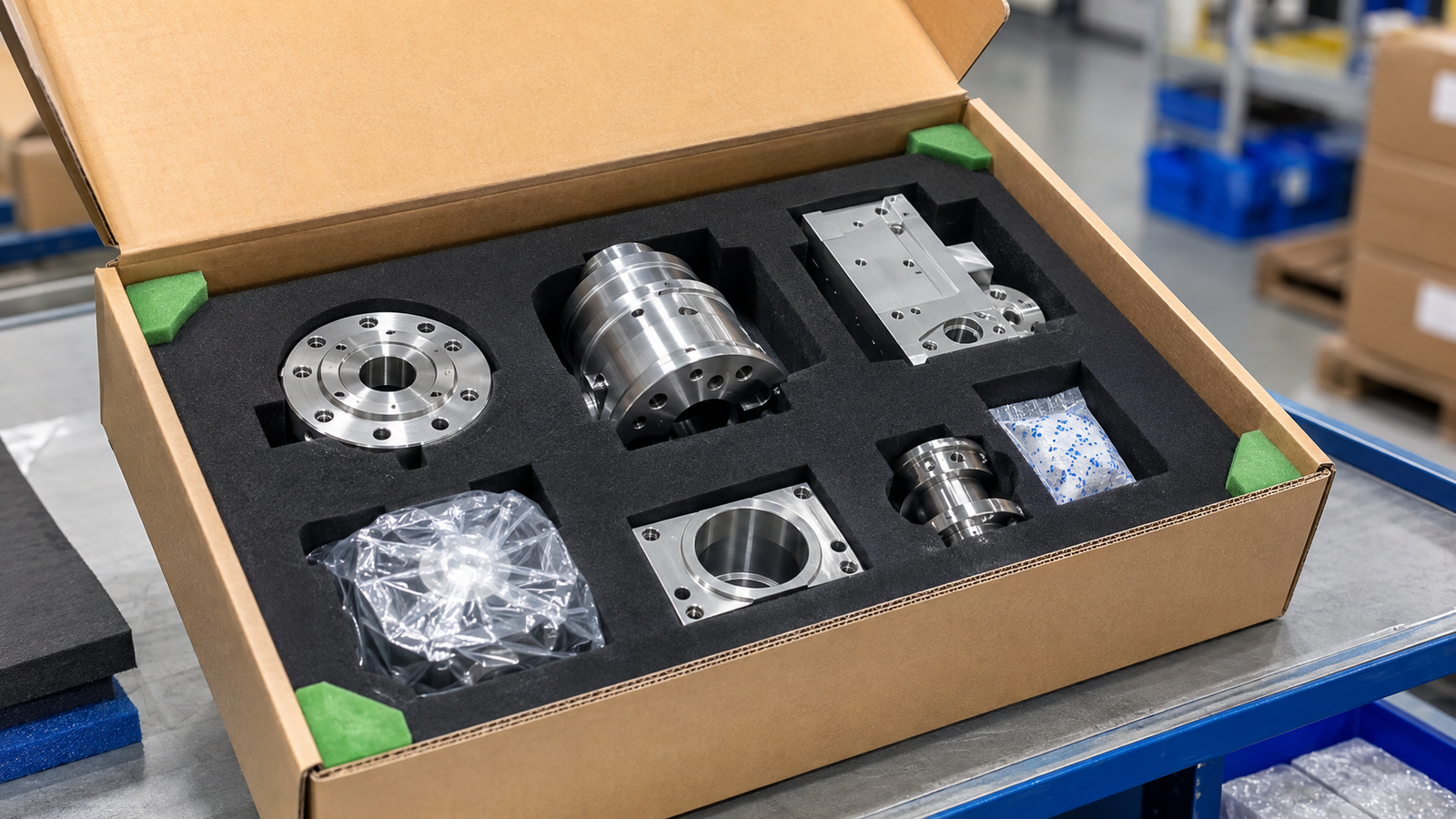
OSM also provides custom packaging services in Vietnam for project-specific protection, labeling, and shipping preparation.
13. Common Mistakes in CNC Machining RFQs
Several avoidable mistakes can delay quotation or create misunderstandings.
Sending Only Images or Screenshots
Images may not provide reliable geometry or dimensional information.
Provide proper technical drawings and CAD files whenever possible.
Missing Material Grades
Generic material descriptions can lead to different assumptions between suppliers.
Unclear Tolerances
Critical dimensions should be identified explicitly.
Missing Quantities
Without quantities, the supplier cannot accurately allocate setup costs.
Unspecified Finishing
Surface treatment can affect both cost and lead time.
Conflicting Drawing Revisions
Different revisions should never be mixed without clear identification.
Missing Inspection Requirements
Special reports, certificates, and functional tests should be defined before quotation.
14. Why Choose OSM Vietnam for Your CNC Machining RFQ?
OSM Vietnam is a custom CNC machining workshop focused on precision mechanical parts and practical engineering communication.
Our approach is intended for customers who need more than a simple unit price.
We focus on understanding drawings, reviewing manufacturing requirements, and discussing how different operations can be coordinated.
Projects may include:
- CNC milled components.
- CNC turned parts.
- Prototype development.
- Small and medium production batches.
- Multiple drawing numbers.
- DFM feedback.
- Surface finishing coordination.
- Dimensional inspection.
- Assembly and packaging.
For buyers managing projects in the USD 5,000–20,000 range, clear technical communication and coordinated manufacturing can be particularly valuable.
OSM does not position itself as a large-scale mass-production factory.
Instead, we focus on flexible custom manufacturing and project-specific engineering support.
Learn more about our workshop on the About OSM page.
15. Request a CNC Machining Quote From OSM Vietnam
If you are preparing CNC machining drawings for a new project, OSM Vietnam welcomes the opportunity to review your requirements.
Please provide:
- 2D PDF drawings.
- 3D STEP models.
- Material grades.
- Quantity per part number.
- Critical tolerances.
- Surface finishing requirements.
- Inspection and documentation needs.
- Target delivery schedule.
- Shipping destination.
Our team can review the information and discuss an appropriate manufacturing approach.
Send your CNC machining RFQ to OSM Vietnam and start with a clear technical discussion.
Website: OSM Vietnam
Email: sales@osmviet.com
Frequently Asked Questions About CNC Machining Drawings
What drawings do I need for a CNC machining quote?
A 2D PDF drawing and a 3D STEP model are recommended. Include material, quantity, tolerances, finishing, and inspection requirements.
Can I request a CNC quote using only a STEP file?
A preliminary review may be possible, but a STEP file alone may not communicate all tolerances, surface finishes, or special manufacturing instructions.
Do all dimensions need tight tolerances?
No. Tight tolerances should be applied according to functional requirements. Unnecessary precision can increase machining and inspection costs.
Should I include a BOM for a multi-part project?
Yes. A BOM helps identify components, quantities, materials, and assembly requirements.
Can a CNC machining workshop suggest design improvements?
Some workshops can provide DFM feedback. Any design changes should be reviewed and approved by the customer.
What is the best file format for CNC machining quotations?
PDF is suitable for technical drawings, while STEP is widely used for exchanging 3D geometry.
Can OSM Vietnam support prototypes before production?
OSM offers rapid prototyping services in Vietnam. The manufacturing and inspection scope is confirmed for each project.